
Apostille for a Death Certificate: Get It Accepted Abroad
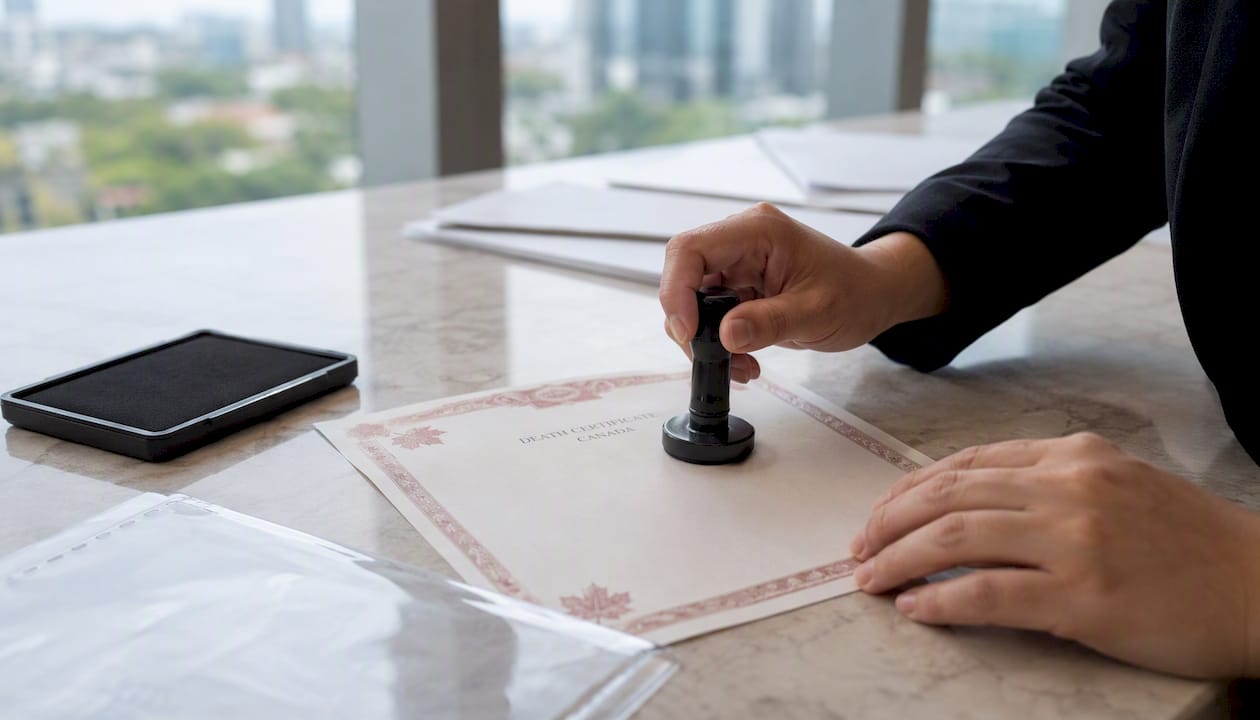
Apostille for a Death Certificate: Get It Accepted Abroad ! Hands stamping death certificate document Canada issues apostilles for death certificates, and it has done so since joining the Hague Apostille Convention.
Apostille for a Death Certificate: Get It Accepted Abroad
Canada issues apostilles for death certificates, and it has done so since joining the Hague Apostille Convention. The competent authority that issues yours depends on your province and the document itself; Global Affairs Canada handles federal authentication in some cases, while provincial offices handle others.
If you don't already have one, your first move is getting a certified long-form death certificate from your provincial or territorial vital statistics office. That document is the foundation of the entire process. Nothing moves without it.
- Fastest path: request the long-form certified copy today if you don't have one on hand.
- Timeline: ranges from expedited same-day service to multiple business days for standard government processing.
- Where to send it: depends on your province and the destination country, covered in detail below.
Key Takeaways
Getting a death certificate apostilled requires the correct long-form certified copy, submission to the right provincial or federal authority, and confirmation of whether your destination country needs further legalization beyond the apostille.
| Point | Details |
|---|---|
| Start with the right certificate | Order a long-form certified death certificate from provincial vital statistics before anything else. |
| Match document to authority | Send to the correct provincial authentication office or Global Affairs Canada based on where it was issued. |
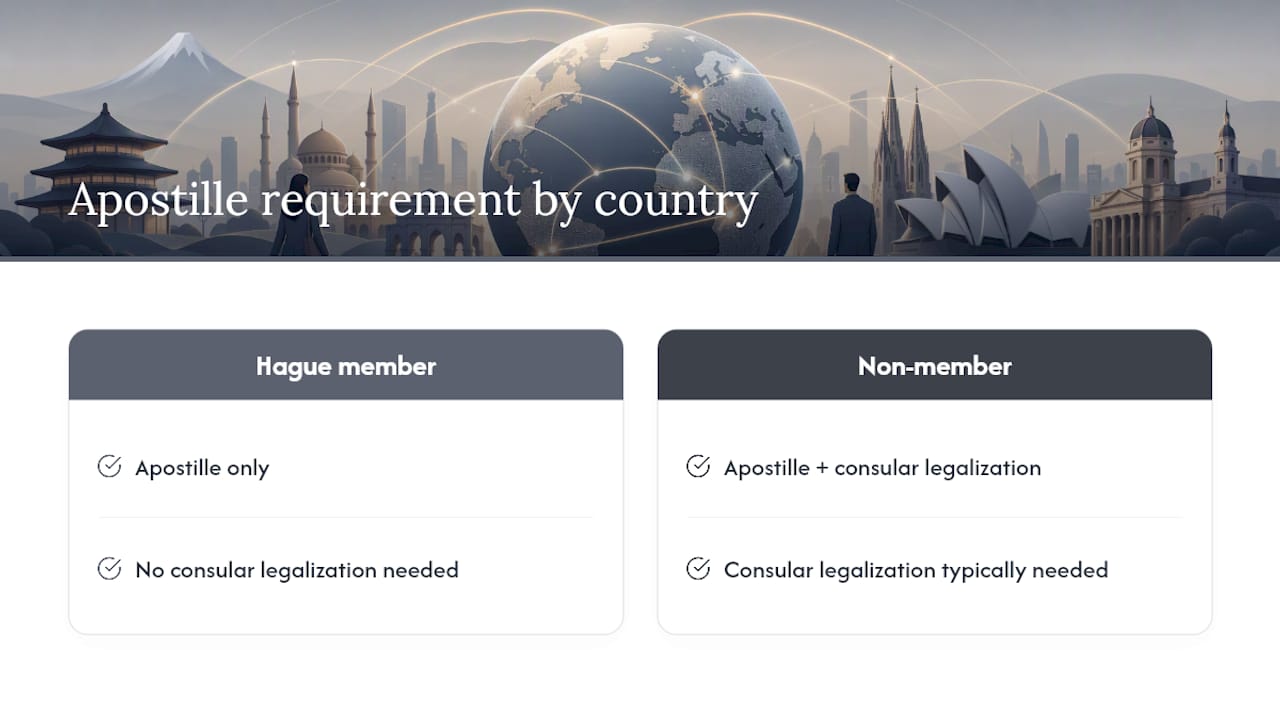
| Check Hague membership first | An apostille alone works for Hague members; non-members often need consular legalization too. |
| Avoid common rejections | Photocopies, funeral-home documents, and missing signatures are the top causes of delay. |
| Consider a specialist for speed | Speedyapostilleservices bundles government fees and reviews documents upfront to avoid resubmission delays. |
Table of Contents
- What Is an Apostille and Who Issues One in Canada?
- Step-by-Step: Getting a Death Certificate Apostilled
- Which Death Certificate Versions Actually Get Accepted?
- How Long Does It Take and What Does It Cost?
- When an Apostille Alone Won't Be Enough
- Common Pitfalls That Delay or Derail Your Application
- Why a Specialist Cuts Out the Guesswork
- How Speedy Apostille Services Handles Death Certificate Apostilles
- Sources
- FAQ
What Is an Apostille and Who Issues One in Canada?
An apostille is a certificate that authenticates a public document for use in another country without the older, slower process of consular legalization. It confirms that a signature, seal, or stamp on a document is genuine, so a foreign government or institution can accept it without additional verification. Notarization is a separate step, done by a notary public to confirm a copy or signature, and it is not the same thing as an apostille.
Canada joined the Apostille Convention in January 2024, which means Canadian documents can now receive an apostille domestically instead of routing through embassies abroad. The apostille itself takes the form of an allonge, a separate certificate physically attached to your authenticated death certificate.
Two different offices matter here, and mixing them up wastes time:
- Provincial or territorial vital statistics offices issue the death certificate itself.
- Provincial authentication programs (such as Alberta or British Columbia's program) or Global Affairs Canada issue the apostille, depending on where the document originated and which office your province has designated.
Step-by-Step: Getting a Death Certificate Apostilled
- Obtain the correct certified copy. Order a long-form certified death certificate from the vital statistics office in the province where the death was registered. Short-form certificates often lack the detail some countries require, so long-form is the safer default.
- Confirm it carries an original signature or seal. Authentication offices reject plain photocopies. The document needs a raised seal, an original signature, or another verifiable mark from the issuing office.
- Check whether your destination country belongs to the Hague Convention. If it does, an apostille should be sufficient on its own. If not, you'll need extra legalization steps, covered further down.
- Arrange translation if needed. Many countries that don't use English or French as an official language will require a certified translation attached to the original before submission.
- Submit to the correct competent authority. That means either your provincial authentication program or Global Affairs Canada, along with the applicable fee and return shipping, or through a private service that handles submission on your behalf.
- Inspect the returned apostille. Check that the allonge is securely attached and the details match your document exactly. Keep at least one extra certified copy on file, since reordering later means starting the whole process again.
Some readers compare this to how other jurisdictions structure the process. In the United States, for example, California's Secretary of State allows apostille requests by mail or in person, a model similar in spirit to what several Canadian provinces now offer.
Which Death Certificate Versions Actually Get Accepted?
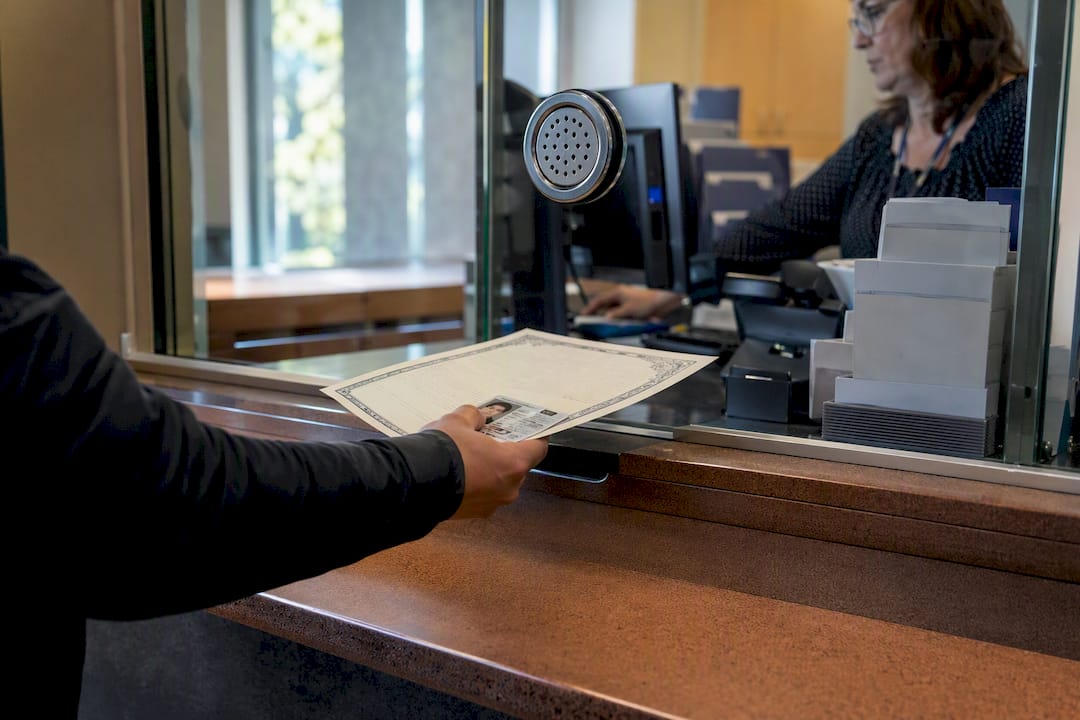
Authentication offices are picky about document type, and this is where most delays happen. Only original certified copies issued directly by a provincial or territorial vital statistics office qualify. A notarized photocopy is not a substitute, no matter how official it looks.
- Original certified death certificates from provincial or territorial vital statistics offices: accepted.
- Notarized copies standing in for a certified original: generally not accepted.
- Documents from funeral homes or religious institutions: not eligible for authentication, according to guidance on apostille requirements for Canadian documents.
- Laminated or glued documents: rejected, since the seal or signature can't be verified once altered.
Provinces vary on the fine print. Alberta's authentication guidance, for instance, notes date-based rules on which original certificates qualify, so a document issued years ago may need to meet different criteria than one issued recently.
Pro Tip: Order the long-form certified copy whenever you're unsure which version you need, and ask the vital statistics office directly whether the document carries the signature or stamp required for authentication. That one phone call can save you a second trip through the whole process.
How Long Does It Take and What Does It Cost?
Processing time depends heavily on which step you're at. Ordering the certified copy from vital statistics is often the slowest part, sometimes taking longer than the apostille itself once the document is in hand.
- Certified copy: often takes several days or longer, depending on the province and request method.
- Apostille issuance: processing times vary from expedited same-day service to several business days.
- Fees to expect: include certified-copy fees, possible notarization and translation costs, authentication or apostille fees, and courier charges for expedited return.
Rates change, so check your provincial vital statistics fee page and the Global Affairs Canada authentication service directly before budgeting. For urgent cases, calling the competent authority beats guessing from an outdated web page.
When an Apostille Alone Won't Be Enough
An apostille works cleanly when the destination country is a member of the Hague Convention, as explained in this Marriage Registration Tools for Expats: U.S. Guide. Send the apostilled death certificate, and most institutions abroad will accept it without further steps.
Non-member countries are a different story. Global Affairs Canada will still issue an apostille for an authenticated document even if the destination isn't a Hague signatory, but for those countries, the apostille is often just the first step. You may need embassy or consular legalization on top of it, along with additional translation or notarization requirements specific to that country.
- Check the diplomatic and consular representation for your destination country before submitting anything.
- Budget extra time and fees if consular legalization applies.
Pro Tip: Contact the destination country's embassy or consulate before you start the apostille process, not after. Their acceptance rules sometimes differ from what's listed on general government resources, and finding that out early avoids a second submission cycle.
Common Pitfalls That Delay or Derail Your Application
Most rejections trace back to a handful of repeat mistakes. Avoiding them up front saves weeks.
- Sending a photocopy instead of an original certified copy.
- Submitting a funeral-home or religious document instead of one from vital statistics.
- Missing an original signature or seal on the death certificate.
- Skipping a required translation for a non-English, non-French destination.
- Sending the document to the wrong authority, provincial office instead of Global Affairs Canada, or the reverse.
Before you submit anything, confirm you have the long-form certificate, verify the signature is intact, include tracked return shipping, and order at least one spare certified copy in case a second country or institution asks for its own original later.
Why a Specialist Cuts Out the Guesswork
Provincial rules on death certificates shift depending on where and when the document was issued, and the difference between a Hague member and a non-member destination changes your entire checklist. An experienced apostille service reviews the document before submission, flags the right competent authority, and bundles government fees into one upfront cost instead of surprise add-ons later.
That matters most when a death certificate is needed on a deadline, for probate, inheritance, or property matters abroad that don't wait for a mailed-in application to work itself out.
How Speedy Apostille Services Handles Death Certificate Apostilles
Speedyapostilleservices reviews your death certificate before submission, checks it against the requirements of your province and your destination country, and confirms whether translation or additional legalization applies before anything gets sent. Government fees are built into one transparent price from the start, so there's no second invoice after the fact.

Getting started is straightforward: submit basic information and a scan of your document, choose a standard or expedited turnaround, and pay online. From there, you either send in the original certified copy or arrange local pickup where available, and Speedyapostilleservices manages the submission, authentication, and secure return shipping. If your destination country requires consular legalization beyond the apostille, the team can walk you through that added step rather than leaving you to figure it out from a government FAQ. Readers in the Greater Toronto Area can also ask about same-day apostille service in Toronto for time-sensitive cases.
Ready to move forward? Visit Speedyapostilleservices to get a custom timeline estimate for your death certificate and start the process today.
Sources
- Authenticate your documents - Before you start (Step 1)
- Canada joins Apostille Convention to facilitate use of public documents abroad
- Alberta
- Apostille Canada — Documents, Legalization and Apostille
FAQ
How Do I Get an Apostille for a Canadian Death Certificate?
Order a long-form certified death certificate from your provincial vital statistics office, then submit it to your provincial authentication program or Global Affairs Canada, depending on where it was issued.
Where Can I Get an Apostille Certificate in Canada?
Apostilles come from provincial authentication programs, such as those in Alberta and British Columbia, or from Global Affairs Canada depending on the document and its province of origin.
How Can I Obtain an Apostille Certificate in Alberta?
Alberta residents apply through the province's document authentication program, which lists eligible public documents including death certificates and any date-based rules for older originals.
Can I Get an Apostille in Manitoba, Canada?
Manitoba, like other provinces, routes death certificate apostilles through its designated provincial authentication process or Global Affairs Canada; checking the current provincial page confirms which applies to your document.
Is an Apostille Always Enough for a Death Certificate Used Abroad?
Only if the destination country is a Hague Convention member. For non-member countries, you'll typically need consular legalization on top of the apostille.
Can Speedyapostilleservices Handle the Entire Process for Me?
Yes. Speedyapostilleservices reviews the document, submits it to the correct authority, bundles government fees into one price, and handles secure return shipping from start to finish.